A Case Study or myglo design system
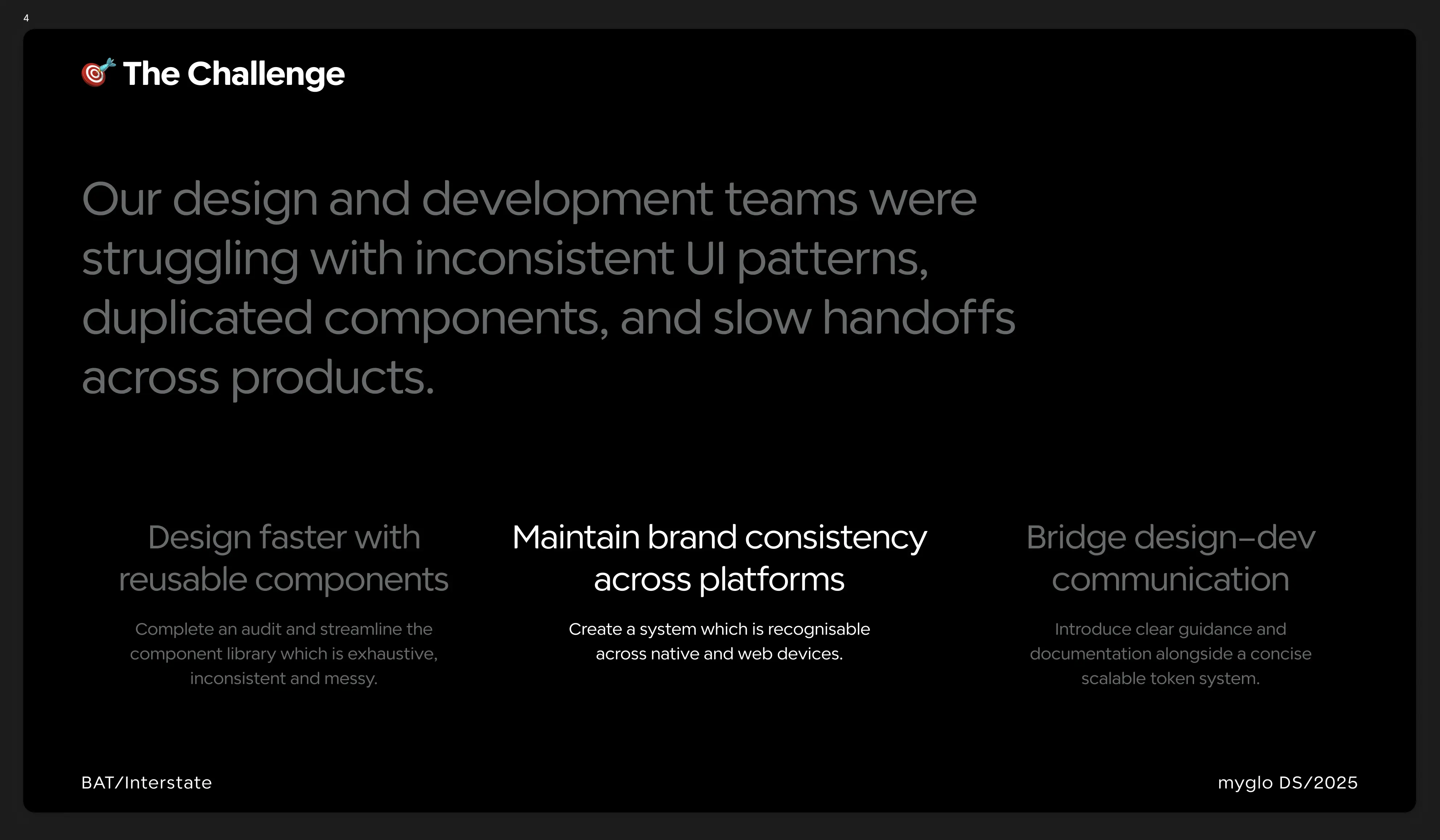
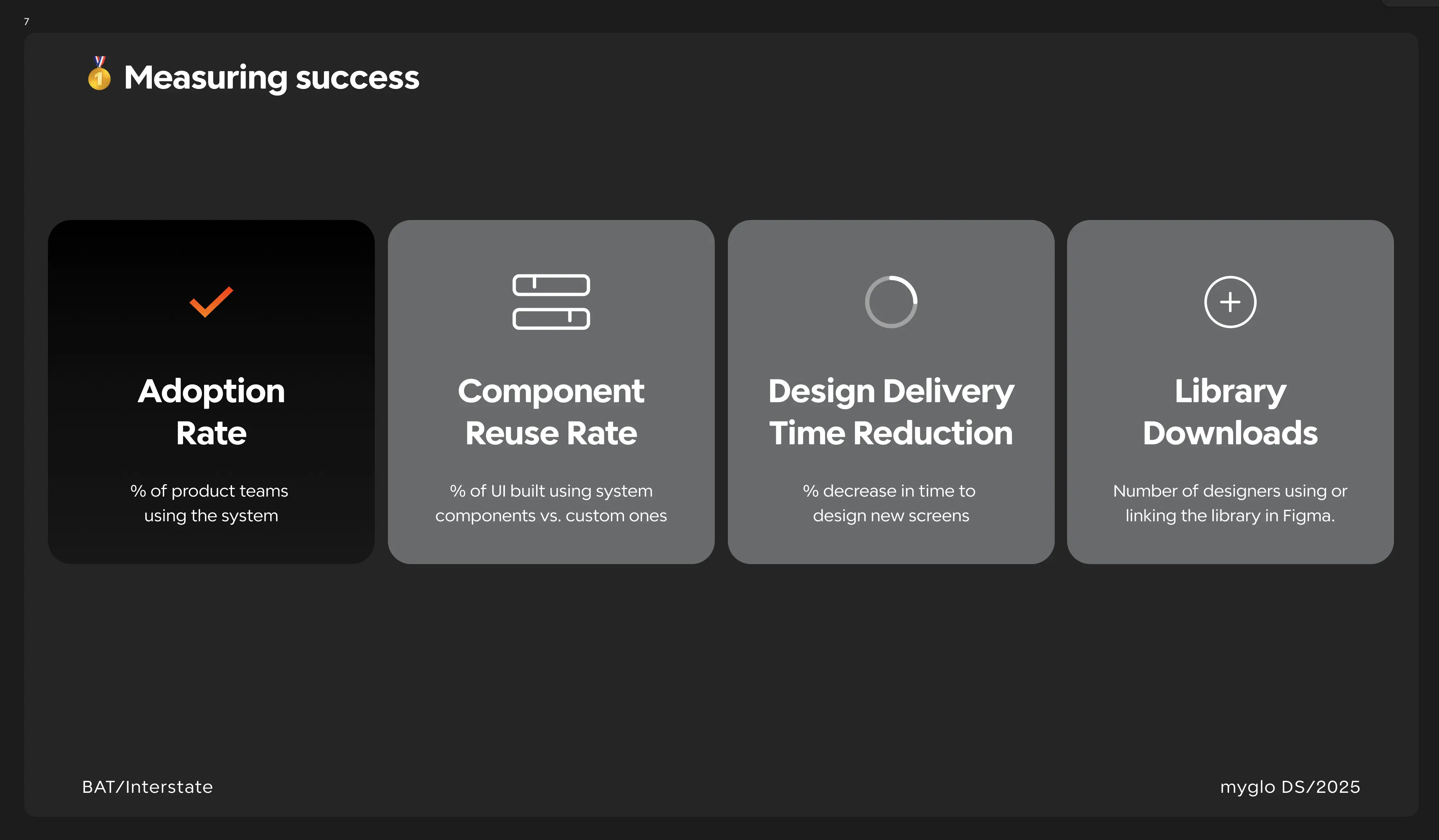
At BAT, the design and development teams were struggling with inconsistent UI patterns, duplicated components and slow handoffs across products — pointing to the need for a unified design language that could scale. The goal was to build a system that enabled faster design through reusable components, maintained brand consistency across native and web platforms, and bridged design-to-development communication with clear guidance, documentation and a scalable token system. As Lead Designer, I was responsible for researching best practice and shaping the system end-to-end: auditing and streamlining an exhaustive and inconsistent component library, studying how other mature design systems handled structure, guidance and token syntax, then designing, testing and iterating alongside the wider design team. Success was measured through adoption rate, component reuse, reductions in design delivery time and library downloads across the organisation. The outcome was a fully scalable, documented design system that improved consistency and was readily adopted by the internal design team. Key takeaways included the importance of thoughtful naming from day one, treating accessibility as non-negotiable in every component, building cross-functional trust by involving designers early, and establishing clear governance and documentation to keep the system healthy over time.
Portfolio Showcase